The Carlo Gavazzi Dupline DT01 line terminator is a key component in ensuring stable and reliable communication across Dupline fieldbus networks. Proper wiring of the DT01 is critical to maintain signal integrity, prevent reflections, and ensure smooth operation of industrial automation systems. This guide provides detailed information on the DT01 wiring diagram, connection methods, and best practices for installation and maintenance.
1. Overview of the DT01 Line Terminator
The DT01 module functions as a bus terminator in Dupline networks. Its main purposes include:
- Terminating the Dupline bus at the last node
- Preventing signal reflection that can cause communication errors
- Ensuring compatibility with other Dupline modules, such as G501 and GAP series
- Supporting industrial-grade environments with high reliability
Understanding the DT01’s role helps engineers ensure proper installation and long-term network stability.
2. Understanding the Wiring Diagram
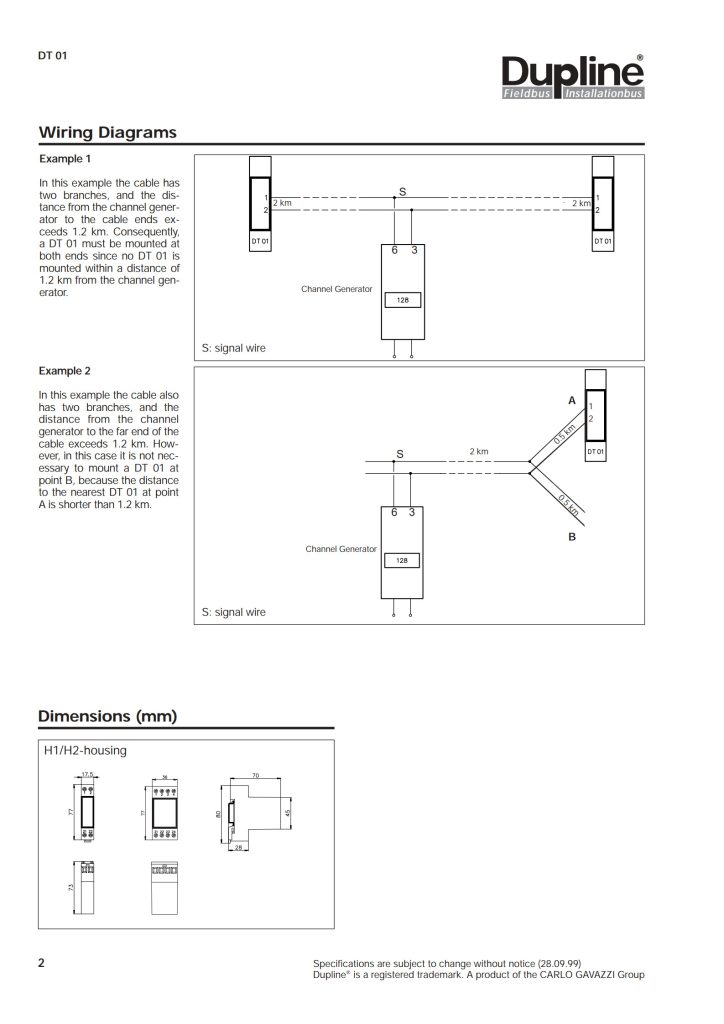
A correct DT01 wiring diagram is essential for successful installation. The key elements include:
- Bus Connections:
- Connect the positive (+) and negative (–) terminals of the Dupline bus to the DT01 module.
- Shielded cables are recommended to reduce electromagnetic interference.
- DIN Rail Mounting:
- Mount the DT01 module on a DIN rail at the end of the Dupline network.
- Ensure the module is securely fixed and aligned properly.
- LED Indicators:
- Observe LED indicators on the DT01 after powering on the network.
- Green LED usually indicates proper termination, while no light may signal a wiring issue.
- Connection Example Diagram:
   Dupline Bus ----> [ DT01 Line Terminator ]
   + -----------+             +
   - -----------+             -
   Shield --------> Terminal Ground
Note: The diagram above shows a simplified wiring representation. Always refer to the official Carlo Gavazzi DT01 datasheet for precise pin assignments and voltage specifications.
3. Step-by-Step Wiring Instructions
Follow these steps to ensure correct DT01 wiring:
Step 1: Identify the Network Endpoint
- Locate the last node of the Dupline fieldbus network.
- Install the DT01 at this endpoint to ensure proper termination.
Step 2: Connect Bus Wires
- Attach the positive (+) and negative (–) wires to the respective terminals on DT01.
- Ensure polarity is correct to avoid communication errors.
Step 3: Ground Shielding
- Connect the cable shield to the grounding terminal on the DT01 module.
- This reduces electrical noise and improves signal reliability.
Step 4: Power On and Test
- Power on the Dupline network.
- Verify that the LED indicators on the DT01 module show proper operation.
- Use a Dupline network tester to confirm signal integrity.
4. Best Practices for DT01 Wiring
- Always install at the last node: Proper placement prevents signal reflection.
- Use shielded cables: This minimizes electromagnetic interference, especially in industrial environments.
- Check connections: Loose terminals can cause intermittent failures.
- Avoid high-interference areas: Keep the DT01 away from motors, transformers, or high-voltage lines.
- Regular maintenance: Periodically inspect connections and verify signal using network testing tools.
5. Common Wiring Mistakes
Some frequent mistakes to avoid include:
- Installing DT01 in the middle of the network instead of the endpoint
- Reversing polarity of the bus wires
- Neglecting grounding of shielded cables
- Using incompatible modules that do not match the Dupline standard
Proper wiring and installation practices prevent communication errors and improve system reliability.
6. Benefits of Proper DT01 Wiring
Correct DT01 wiring provides several advantages:
- Stable and uninterrupted data transmission across the Dupline fieldbus
- Reduced troubleshooting and maintenance needs
- Improved reliability for industrial automation applications
- Seamless integration with other Dupline modules, including digital and analog I/O
7. Conclusion
The Carlo Gavazzi Dupline DT01 line terminator is essential for the performance of Dupline fieldbus networks. Understanding the wiring diagram and proper installation procedures ensures signal integrity, prevents data loss, and guarantees reliable communication in industrial automation systems. By following the wiring best practices, engineers can maintain a high-performance Dupline network that operates efficiently in various industrial environments.